 Skip to content

A chipped edge, a stain that will not lift, or teeth that look shorter than they used to can sit in the back of your mind for years. When should you see a cosmetic dentist? Book when the concern is about how the smile looks, routine cleaning has not solved it, and you want a plan that also protects the teeth underneath. Pain, swelling, a loose tooth, or a broken tooth that hurts belongs with urgent dental care first. Appearance can wait until the tooth is stable.
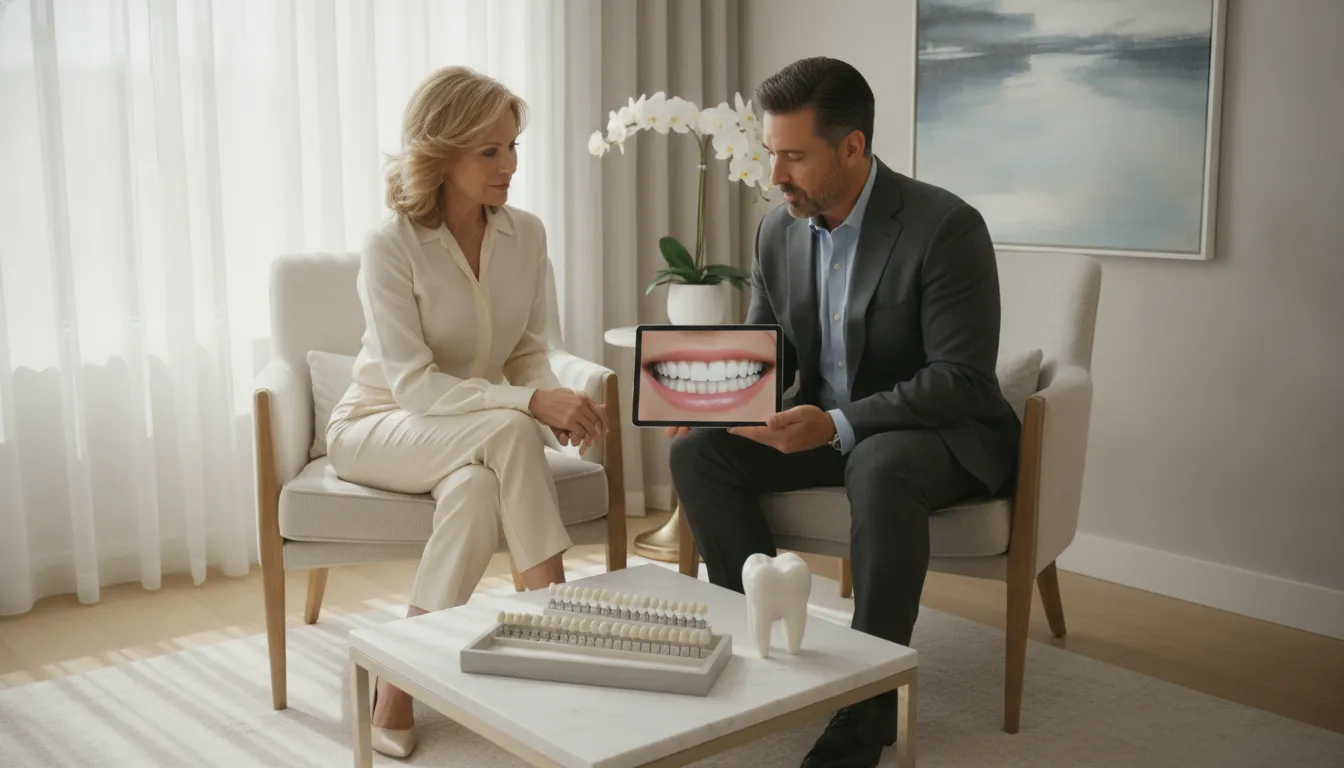
Rifkin Raanan is a multi-specialty practice in Beverly Hills and Brentwood. Specialists work in one setting, and an in-house lab of master ceramists finishes aesthetic work so it can look like natural teeth. Dr. Robert Rifkin’s cosmetic dentist profile describes a goal of a naturally beautiful dental and facial composition, built with an interdisciplinary team. That is the standard a timing decision should meet: look at the smile, and look at the health behind it.
When should you see a cosmetic dentist?
See a cosmetic dentist when you can point to a specific change in the smile and you want to know which options fit it. The visit is a consultation, not a commitment to veneers or whitening. You are asking whether the concern is stain, shape, wear, spacing, or something that needs repair first.
A useful test is simple. If a cleaning and careful home care would not change what bothers you, the question has moved past routine maintenance. A front tooth you cover in photos is one example. So is a shade that no longer matches a crown, or edges that look uneven when you speak. It also includes a smile you have already tried to brighten without a lasting change.
The cosmetic dentistry page at Rifkin Raanan lists the kinds of concerns the practice plans for, from discoloration and chips to gaps, worn teeth, and missing teeth. Use that list as a map, not as a menu you must order from. A good visit tells you which item, if any, applies to you.
Busy patients often delay because the change feels minor. A small chip can stay small. It can also catch the lip, stain at the edge, or change how you bite. You do not need to decide the treatment before you call. You need a clear description of what changed and how long it has looked that way.
Concerns that are worth a visit
Not every dislike of a photo is a dental problem. These patterns are the ones patients can describe clearly, and the ones a cosmetic dentist can sort in a visit.
Stains that cleaning does not lift
Coffee, tea, red wine, and tobacco sit on enamel. A professional cleaning often improves that surface stain. Color that remains after a cleaning may sit deeper in the tooth, or it may be an old filling or crown that cannot change color the way enamel can. The American Dental Association notes that whitening can help surface stains and deeper discoloration. Only natural teeth whiten. Tooth-colored restorations do not. A cosmetic visit is the right next step if one tooth is dark beside a bright one. It is also right if a crown looks dull next to whitened enamel. Whitening alone will not match the restoration.
Chips, cracks, and uneven edges
A chip on a front tooth is both a look and a structure question. Bonding can rebuild a small edge. A veneer or crown may be discussed when the chip is large, the crack keeps growing, or several teeth need to match. The ADA MouthHealthy guide says veneers are used for chipped, broken, stained, crooked, or misshapen teeth, and to mask gaps. It also says decay or gum disease should be treated before a veneer is placed. Bring the chip to a dentist before you decide which of those paths fits.
Teeth that look short or worn
Edges that look flat, translucent, or shorter than they did a decade ago often reflect wear. Grinding, acid, and a bite that overloads the front teeth can all do this. Cosmetic materials can restore length, but only after someone checks why the tooth wore down. If you wake with a sore jaw or you notice the edges changing year to year, say so. The plan may need to protect the new length, not only replace it.
Gaps, uneven shapes, and a smile you hide
A small space or a tooth that sits in can be a shape question rather than an orthodontic one. A pointed canine can be the same. Sometimes alignment is the better path. Sometimes a limited change to the edges is enough. The point of the visit is to hear which one matches the tooth, not to start with the largest treatment.
Which concern points to which conversation
Patients often arrive sure they need veneers. They then learn the stain would respond to whitening, or that a single chip is a bonding visit. The table below is a starting map. It is not a diagnosis. Your dentist confirms the fit after an exam.
| Concern comparison |
|---|
| What you notice: Yellow or dull enamel, stains after cleaning Often discussed first: Professional whitening of natural teeth Ask this before you choose: Will existing crowns or fillings stay the old shade? |
| What you notice: One dark tooth next to a normal shade Often discussed first: Exam first, then whitening or a covering Ask this before you choose: Is the color from an old injury or a prior root canal? |
| What you notice: Small chip or worn edge on a front tooth Often discussed first: Bonding or a limited edge repair Ask this before you choose: Is the chip stable, or is the crack spreading? |
| What you notice: Several front teeth stained, short, or uneven Often discussed first: Porcelain veneers, after health is clear Ask this before you choose: How much enamel is involved, and can I see the plan on my own teeth? |
| What you notice: A broken or heavily filled tooth Often discussed first: A crown or other full-coverage restoration Ask this before you choose: Does the tooth need strength, not only a new surface? |
| What you notice: Wear on many teeth, with bite or jaw soreness Often discussed first: A broader plan, not a single veneer Ask this before you choose: What is causing the wear, and how will new length be protected? |
Rifkin Raanan offers professional teeth whitening, metal-free dental bonding, and porcelain veneers as separate services. Read the page that matches your concern. Do not assume the largest option is the default.
A smile makeover is a coordinated plan across several teeth. It is used when one repair would leave the rest of the smile looking unfinished. Ask whether a smaller step would solve the tooth in front of you before you agree to treat a whole row.
When health should come before appearance
Appearance is a fair reason to call. It is not the first reason if the tooth or the gum is in trouble. Book prompt dental care if you have any of the following. Tell the office it may be urgent.
- Pain that wakes you, swelling, or a bitter taste you cannot rinse away.
- A tooth that is loose, knocked out of place, or cracked with sharp pain on biting.
- Bleeding gums, a gum boil, or a tooth that feels longer because the gum has dropped quickly.
- A crown or veneer that has fallen off, especially if the tooth underneath is sensitive.
The cosmetic dentistry page notes that ideal candidates do not have untreated cavities or gum disease. Those problems are handled as part of the plan rather than ignored. MouthHealthy makes the same point about veneers: placing them over unhealthy teeth can make existing problems worse. A cosmetic dentist who also watches the health of the mouth will say so. That pause is a sign of a careful plan, not a refusal to help the smile.
Sensitivity after whitening is common and usually temporary, according to the ADA whitening overview. Sensitivity with a dark tooth, a crack line, or pain on release of a bite is different. Mention it. The visit should sort stain from a tooth that needs restorative care.
What the visit is for, and what it is not
You do not need a procedure name when you call. You need the change you see, how long it has been there, and any photos that show it in ordinary light. A short list keeps the visit focused:
- Name the teeth that bother you, such as the two front teeth or one side tooth.
- Say whether the issue is color, a chip, length, a gap, or crowding.
- Note pain, grinding, or a recent injury, even if it seems unrelated.
- List crowns, veneers, or large fillings already on those teeth.
- Bring a photo of your smile from a few years ago if the change was gradual.
The office can then tell you whether the next step is whitening, a repair of one tooth, or a longer plan. You should leave knowing what was seen and what was not recommended. A practice that jumps to a full set of veneers before looking at the bite and the gums is skipping the decision this article is about.
Rifkin Raanan describes the work as more than a cosmetic-only office. The team includes cosmetic dentists and the specialties that support a stable result, with master ceramists in the lab on site. His Beverly Hills profile describes him as an international lecturer and author on facial analysis, full mouth reconstruction, and aesthetics for natural teeth and implants. That mix matters when a pretty edge would fail if the bite is off.
How Beverly Hills and Brentwood handle the same question
The timing question is the same at both offices. The setting is not. The Beverly Hills office is at 414 N Camden Drive, Suite 1280, Beverly Hills, CA 90210. The main phone is (310) 205-5300. Hours there are Monday through Friday, 9:00 a.m. to 5:00 p.m. The Brentwood office is at 11980 San Vicente Boulevard, Suite 814, Los Angeles, CA 90049. Weekday hours run from 9:00 a.m. to 5:00 p.m. Confirm the current appointment details when you book. The Brentwood page asks patients to do that.
Beverly Hills is mainly a cash-basis office. Brentwood accepts Cigna and almost all PPO plans. Some Beverly Hills providers also accept insurance: Dr. Waterman accepts Delta, and Cigna is accepted there as well. Ask which office and which doctor match the care you want before you assume a plan applies. Do not treat the two offices as interchangeable on payment.
New patients can book either office. The online path is the appointment page, where you choose the location that fits. If you are comparing a small chip with a larger wear pattern, say that when you schedule. The visit should be long enough for an honest look, not a rushed shade conversation.
A clear next step
When should you see a cosmetic dentist? Come in when the smile has changed in a way you can describe. Home care and a cleaning have not fixed it. You want to know whether whitening, bonding, veneers, or a broader plan fits. Go sooner if there is pain, swelling, or a broken tooth. The cosmetic conversation can follow once the tooth is comfortable and the gums are healthy.
If you are ready to sort a stain, a chip, or worn edges, call the Beverly Hills office or book the office that is easier for you. You will get a recommendation tied to your teeth, not a promise that one procedure suits every smile.
Frequently asked questions
When should you see a cosmetic dentist instead of waiting?
See one when a stain, chip, gap, or worn edge still bothers you after a cleaning, or when a crown no longer matches the teeth beside it. Waiting is reasonable for a tiny mark that does not catch your lip or show in photos. Do not wait on pain, swelling, or a tooth that feels loose.
Can whitening fix a single dark tooth?
Sometimes, and sometimes not. The ADA explains that whitening works on natural teeth and does not change the color of tooth-colored restorations. A single dark tooth needs an exam first, because the color can come from an old injury or prior treatment. The visit decides whether whitening, bonding, or a veneer is the honest option.
Is a chip always a veneer?
No. A small, stable chip is often a bonding conversation. Veneers come up when several front teeth need shape or color together, and only after decay and gum problems are addressed. MouthHealthy notes that veneer care is not reversible, because enamel is removed, so the choice should be deliberate.
Do I need a referral before I book?
The public pages do not state a referral rule, so ask the office whether your plan or concern needs one before you book. Call (310) 205-5300 or use the appointment page and choose Beverly Hills or Brentwood. Mention the concern, any insurance question, and whether you prefer a particular doctor.
Will one visit commit me to treatment?
A consultation is a look and a recommendation. You can take the plan home. Treatment starts only after you understand which teeth are involved, what health issues come first, and how the result will be maintained.
