 Skip to content

A bright, even result can still look borrowed. What makes cosmetic dentistry look natural is not a whiter shade or a longer list of procedures. It is a plan that fits your face, your gums, and the way your teeth meet, then uses only the care that plan requires.
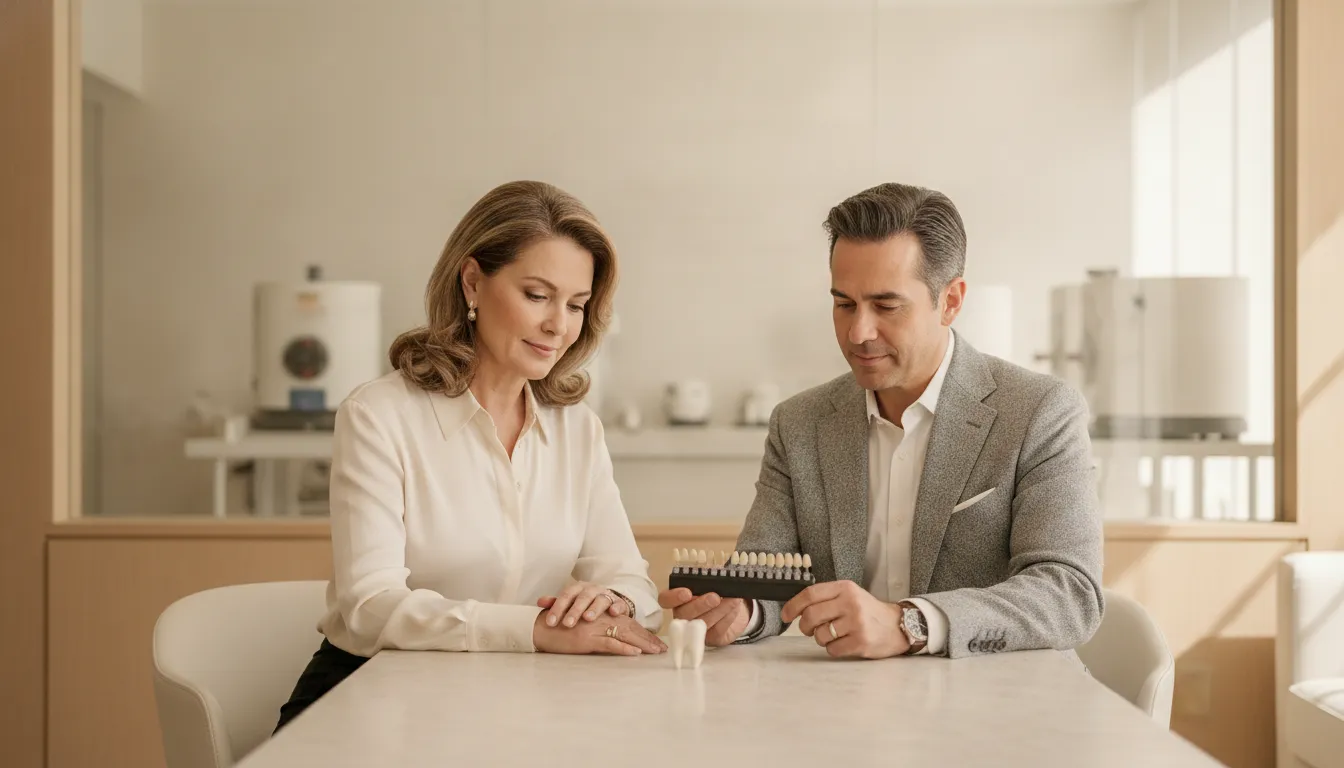
What makes cosmetic dentistry look natural
The American Dental Association’s MouthHealthy glossary describes cosmetic dentistry as care provided to improve appearance rather than health. That line is a useful boundary, not a treatment plan. Appearance still has to sit on a mouth that can chew, speak, and be cleaned.
A review of smile design in the Journal of Conservative Dentistry makes the same point from the clinical side. The result should not depend on looks alone. A stable smile depends on how teeth, gums, muscles, joints, and the bite work together. Facial composition and dental composition both belong in the plan.
At Rifkin Raanan, that idea is already part of how the practice talks about a smile. The Own Your Smile philosophy says the aim is your smile, not someone else’s idea of what it should be. The Beverly Hills team plans around your face and your goals, and it will say when a smaller change serves you better than a full set of restorations.
Natural, in this setting, means a few concrete things. Tooth edges follow a curve that suits your lip. The color has depth instead of one flat white. The gum line is even enough to frame the teeth. The bite does not ask the new surfaces to do work they cannot hold. None of those choices can be copied from a photograph of another person.
Start with the face, not a template
The same smile-design review treats the face as the first reference. The midline of the smile, the support of the lips, and the amount of tooth that shows at rest and in a full smile all change the plan. A tooth that looks correct on a model can look long, short, or tilted once it is in your mouth.
This is why a template smile is a common source of an artificial result. If every front tooth is the same length and the same bright shade, the eye reads the set as a unit. Natural front teeth are related, not identical. The two center teeth usually lead. The teeth beside them are a little shorter, and the curve continues back.
Age, lip shape, and facial proportions belong in that reading. A mature lip does not need the same tooth length as a younger one. A wide smile does not need every back tooth covered to look finished. The Beverly Hills doctors describe the first visit as a conversation about what you want to change. Followed by an exam of the smile and the health beneath it. You should leave with a recommendation, not a preset package.
Dr. Rodney Raanan, a Harvard-trained prosthodontist, and Dr. Robert Rifkin, who has spent more than four decades in aesthetic dentistry, are part of that planning team. Dr. Steven Rifkin and Dr. Justin Raanan, a periodontist with Harvard specialty training, extend the same case across health and appearance. The point of naming them is not a ranking. It is that proportion, bite, and gum line can be judged in one office.
Use the smallest change that solves the concern
An obvious result often starts with doing more than the concern requires. Whitening, bonding, a limited number of veneers, orthodontic alignment, and full reconstruction answer different problems. Using the largest option for a small concern can make healthy tooth structure carry a look it did not need.
The practice states this directly on its veneer page. In some cases one or two porcelain veneers are enough, and covering every visible tooth is not the goal. The doctors also say their best work is often invisible, because a smile fitted to you should not announce itself. That is a planning rule, not a promise that every case stays small.
A useful way to sort the choice is to name the concern first, then the least invasive option that can address it. Stain alone is not the same problem as a worn edge, a gap, or a missing tooth. The cosmetic dentistry services cover that range, from whitening and bonding to veneers, crowns, and implants. The menu is there so the plan can stay narrow.
| Concern. | Smaller option. | Why a larger plan can look less natural. |
|---|---|---|
| Surface stain with sound teeth. | Professional whitening. | Covering intact teeth can replace texture you did not need to lose. |
| A chip, small gap, or edge wear. | Bonding or limited contouring. | A full veneer set can make one repaired tooth look like a new smile. |
| Color and shape on a few front teeth. | A limited number of veneers. | Treating every tooth can flatten the natural differences between them. |
| Worn bite, missing teeth, or failing restorations. | A staged reconstruction. | Appearance-only work can leave the bite unsupported. |
The table is a conversation guide, not a diagnosis. Gum disease, decay, or a joint problem can move a case out of the smallest box. The cosmetic dentistry page says ideal candidates have no untreated dental disease, and that those problems are handled in the plan rather than ignored. Health comes before the finish.
Match color, texture, and the gum line
Color is where many cosmetic results give themselves away. A single opaque white does not behave like enamel. Natural teeth show translucency at the edge, warmer color near the gum, and slight differences from tooth to tooth. A restoration that ignores those layers can look flat even when the shape is right.
Shade has to be chosen against your skin, your lip color, and the teeth that will remain. If only a few teeth are restored, they have to agree with the neighbors. If more of the smile is restored, the set still needs variation. One shared shade for every tooth is a frequent reason a result looks manufactured.
The gum line matters just as much. Uneven gum heights, inflamed tissue, or a lip that rises high can expose the edge of a restoration. The smile-design literature treats the gum line as part of dental composition, not as a detail to fix after the teeth are made. A periodontist on the team can plan gum contouring or crown lengthening when the frame, not the tooth, is the issue.
Texture belongs in the same pass. Hand-finished porcelain can carry fine surface character that a uniformly glazed surface lacks. Atelier Aesthetics, the on-site ceramics lab, is where Rifkin Raanan says every veneer is made, by master ceramists the doctors can consult while the work is in progress. That access is a practical advantage for shade and surface. It does not guarantee a result, and it is not a reason to veneer a tooth that did not need one.
Let the bite decide what the smile can hold
A natural-looking smile that the bite cannot support will not stay natural. Edges chip, veneers debond, and a patient starts avoiding certain foods. The smile-design review is explicit that esthetic planning has to include occlusion, muscles, and the joints. Looks are one output of that system, not a separate project.
This is where cosmetic care and restorative care meet without becoming the same service. A chipped edge from grinding is not only a shape problem. A missing tooth changes how the other teeth meet. Porcelain crowns, implants, and a full-mouth plan exist for those cases. Choosing them is a bite decision first and an appearance decision second.
You can hear that mix in the doctors’ training. Prosthodontic training is centered on restoring teeth. Periodontal training is centered on the tissue and bone that hold them. General and aesthetic experience covers the teeth people see. A case that needs more than one of those views should not be planned as if appearance were the only specialty in the room.
Ask how the proposed surfaces will meet, what will protect them if you clench, and which teeth are being left alone. A clear answer is a better sign of a natural plan than a promise about how white the result will be. If the answer is vague, the design is not finished.
How the Beverly Hills office approaches the plan
Rifkin Raanan describes itself as a multi-specialty practice, not a cosmetic-only studio. Four doctors share the Beverly Hills work, with an in-house lab on site. The flagship office is at 414 N Camden Dr., Suite 1280, Beverly Hills, CA 90210. A second office is at 11980 San Vicente Blvd., Suite 814, Los Angeles, CA 90049, for Brentwood and the west side. Both list weekday hours of 9:00 a.m. to 5:00 p.m.
Beverly Hills is mainly a cash-basis office, and Brentwood accepts Cigna and almost all PPO plans. Insurance details are provider-specific, so the useful step is to ask the office which doctor and which location apply to you. That distinction matters before you assume a cosmetic plan will be billed one way at both addresses.
The office phone is (310) 205-5300. The first visit is framed as a conversation rather than a commitment. You can also book through the online appointment page, choosing the office you want. Neither path should be treated as a same-day promise. The team reviews the request and follows up to schedule.
Bring the concern you actually notice, not a picture of a stranger’s smile. A chip you see in photos, a shade you dislike, or a bite that feels uneven will lead to different questions. The doctors can then tell you whether whitening, bonding, veneers, gum treatment, or a larger reconstruction belongs in the conversation at all.
Questions to ask before you approve a design
Use the visit to test the plan, not to collect adjectives. These questions keep the focus on fit.
- Which teeth are you recommending we treat, and which should stay untouched?
- How did my lip line, gum line, and facial proportions change that choice?
- What shade and surface variation will keep the restorations from looking like one set?
- How does my bite limit the length, thickness, or material?
- Who will shape the ceramics, and can the dentist review that work while it is being made?
- What maintenance, repair, or replacement should I expect later?
If the answers skip a tooth you hoped to change, that can be a good result. Leaving a sound tooth alone is often what keeps the smile yours. If the answers skip the bite or the gums, ask for that part before you approve anything.
It also helps to separate this conversation from a general definition of the field. The cosmetic dentistry page already explains what the care includes and who may be a candidate. Your question is narrower. You are asking why a result will look like you, and what would make it look like a replacement instead.
What a natural plan does not promise
No ethical plan promises that friends will not notice, that a material lasts forever, or that one design suits every face. Porcelain and composite age differently. Whitening needs upkeep. Gum levels can change. A result that looks right at delivery still depends on home care and reviews.
Be careful with before-and-after photos, including ours. They show what was done for that person. They do not show what your enamel, gums, and bite will allow. A photo with a very even, very bright set may be exactly what you do not want if your goal is a smile people cannot quite place.
Cost is a separate question, and this article does not price care. The right design can be smaller or larger than you expected, and the fee follows the dentistry, not a package name. Financing and insurance vary by office and by provider. Ask for that in the visit rather than inferring it from a general cosmetic page.
The standard to hold is simpler than a slogan. The plan should name the teeth involved, the tissue around them, the bite that has to carry them, and the person who will finish the ceramics. When those four points are specific, the smile has a chance to look natural. When they are generic, it will tend to look generic too.
A last note before you book
When you are ready to talk through your own smile, visit the cosmetic dentistry care page for the Beverly Hills office, or call (310) 205-5300.
Frequently asked questions
What makes cosmetic dentistry look natural?
Proportion, color, gum line, and bite do. The teeth should match your face and each other, with variation rather than one repeated shape and shade. The gum line should frame them, and the bite should be able to hold the new surfaces.
Does a whiter shade look more natural?
Not by itself. A very bright, opaque shade can look flat, especially if nearby teeth are warmer or more translucent. The better test is whether the shade agrees with your skin, lips, and the teeth that will remain.
Do I need a full set of veneers for a natural result?
No. Some concerns are better treated with whitening, bonding, or a few veneers. Treating every visible tooth can erase the small differences that make a smile look personal. The exam should justify each tooth included.
Can the gums make a smile look artificial?
Yes. Uneven gum heights or inflamed tissue can expose edges and break the line of the smile. That is a reason to plan the gum line with the teeth, sometimes with a periodontist, instead of adjusting it after ceramics are made.
How does an on-site lab affect the result?
It lets the dentist and ceramist check shade and surface while the work is being made. At Rifkin Raanan, Atelier Aesthetics is the in-house lab where the practice says its veneers are crafted. The lab supports the plan. It does not replace the decision about which teeth need treatment.
